5 Ways to Save Money and Save Planet

Live Better. Lower Costs

Save money and save your environment with simple tricks to eat healthy, get smart-productive, be comfy and chill, enjoy being active and waste less. Permaculture is intentional design to create a truly sustainable culture.

Here a few design ideas to slip into your lifestyle.

1. Save Your Health

Consider what foods you love. And find an easy way to grow them. Lets make a cup of tea. Fancy lemon grass and ginger? That’s easy to grow.

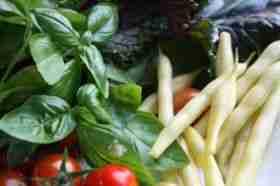
And I love eating basil, so I grow it in a wicking pot with a cage over the top. I use worm poo as the soil in the pot and the basil is bursting with flavour. This small design cycle is simple. The Food Scraps go to the > wormfarm then > to wicking pot with basil seed then > to plate. Whereas farmed basil has a more complex and expensive pathway to grow and transport the basil. And it quickly looses flavour.

Eating healthily reduces costs in medical bills and loss of productivity. Not to mention our enjoyment of life.
2. Get Smart-Productive

A food that is self sustaining and very cheap to start in a warm temperate region is sweet potato. Buy a fresh sweet potato, let it sprout in the cupboard, cut off the sprouts with a small section of the tuber and plant it close to the surface of the soil. We can cook the leaves as well as the new young tubers. The cycle is Tuber to > soil > perennial food supply > better water retention and organic matter in the soil > more tubers.

Not only are you getting years of free food, you are improving your environment by protecting soil from erosion, holding moisture in the soil for cooling in summer and creating habitat.

To take this a step smarter, grow indigenous ground covers. In our area Dianella, Pigface and Warrigal greens are a smart choice.

And to take this food to a greater level of sustainability, cook it in a solar oven or rocket stove.

Be Comfy and Chill

Design to capture cooling breezes in summer and deflect frost and cold wind in winter. Explore your microclimates (inside and outside the home) and create shelterbelts.
Enjoy More Action

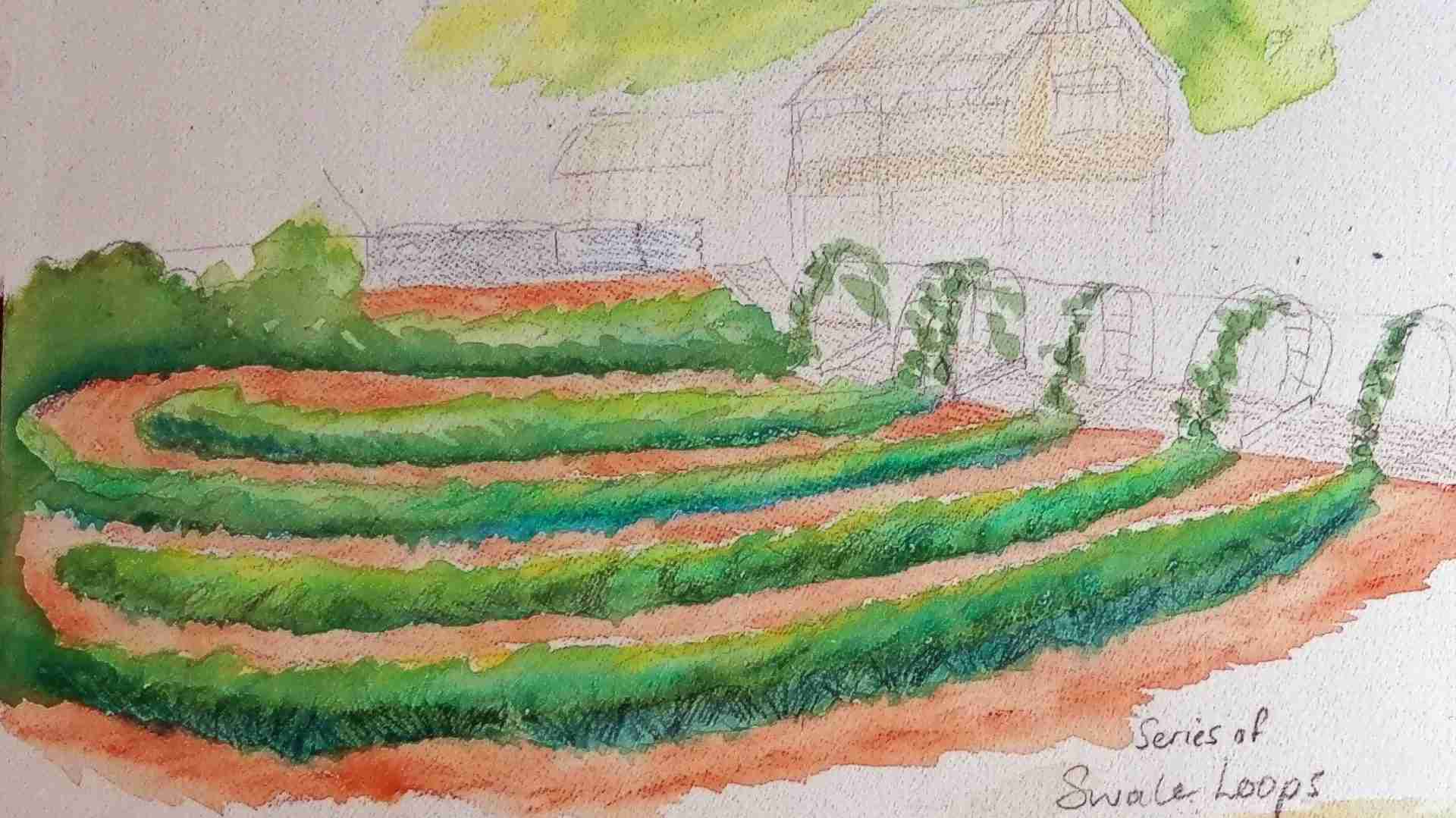
What activities do you love doing? Find a way to incorporate this into your lifestyle design. I like walking, so I have put in a labyrinth of garden paths. I make time to walk to friends places. And I campaign for better walking routes, water stations and public toilets. Continence Australia has developed a national public toilet map.

bushwalk

Recently, a design client said she liked running. Her running group share ideas, fresh food and observations about the local area. And as a bonus, active people need less heating.

Finding how to hook in to our passions and curiosity helps us build a better future.
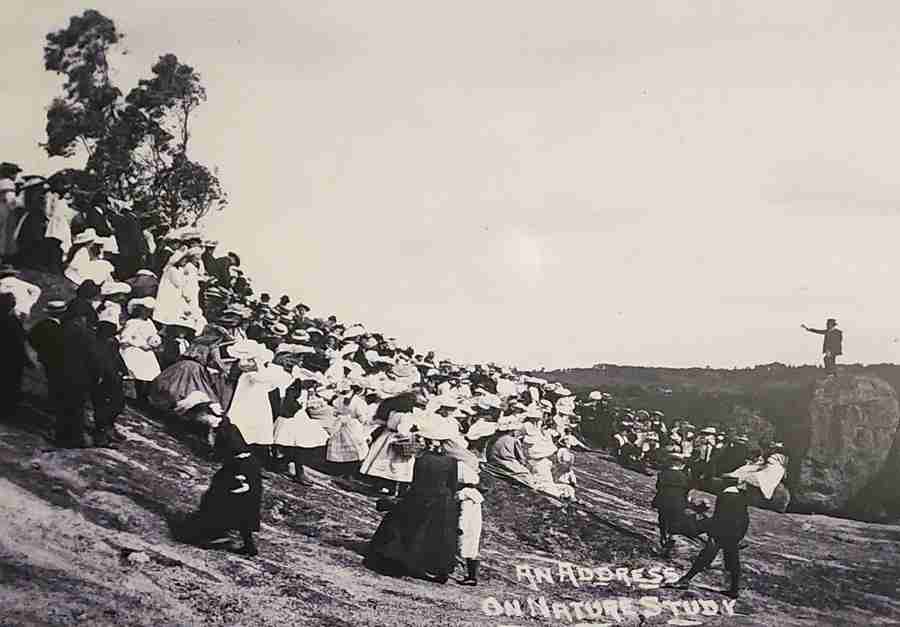
Photograph in Beechworth hotel. Victoria, Australia

Waste less Save More

Do a quick audit of what you throw away. This will help determine how you can waste less resources and money. I know we throw away plastic from purchases. If I can buy less, I will have less plastic in our system. I also know that I throw out old clothes so when I buy clothes I ensure that they can be composted. The worms love some clothing for insulation and laying eggs.

learning to glaze old windows save a lot of money and provides opportunities to be creative.

For the past 30 years we have used our paper waste in the garden. We sheet mulched more than half an acre to suppress the kikuyu (saving hours of mowing each year), and now we use paper mâché to gently reshape the landscape, building path edges and swales with paper.

Join the Live Discussion

April Sampson-Kelly, a Permaculture Elder with over 30 year of research, writing, implementing, designing and living with Permaculture principles will give us hands on experience with solar ovens, heating tricks, seed saving, wicking without plastic and making gardens from paper waste. 

Bring your lunch to enjoy at the Eco Garden after the workshop. After lunch April will be speaking on Climate Change Adaptation at our monthly gathering at the same location. 

If you’re not yet a Permaculture Central Coast member, you can join us by visiting:
https://permaculturecc.org.au/… Annual Membership fees are $20 for an individual or $30 for a family. Join today and enjoy access to all our events!

Get your ticket here

Dr Kim Loo on Permaculture, Joy, Wellbeing & Medicine

Dr Kim Loo is an active carer. She is inspired by her Permaculture garden, her Permie pod helpers and her patients. Kim is a member of Doctors for the Environment and other climate advocacy groups. She has noticed a big shift in people’s appreciation of the connection between health and the environment. In this interview she shares a lot of great ideas and encourages us to get active and finding joy.

What does Permaculture do for you?

Dr Kim Loo said “well I suppose in a way because my family are Buddhists and in a way it kind of aligns with Buddhism anyway in terms of the principles and the concepts, And it was just lovely to actually finally go to Permaculture and realize there’s a whole lot of people who are aligned with what I line with which is to protect nature work with nature and rewild my garden. I’ve never been super structured with my garden. I get edible plants that grow in outside areas. I leave them alone.

I’ve been a Doctor for 35 years now. We’re actually about to have our 35 year reunion from Sydney University Medical School. Health can’t be seen in isolation. Because health is impacted by all the systems around health. And the way that I approach health is the way a lot of my friends, who are doctors, approach Health.

Core of health – Biological and Social Determinants

We look at the core of health and the biological determinants of health. So, I ask what their family history is: whether there’s any vascular disease, whether there’s an anxiety depression, diabetes, cancers. Then I look at their health in terms of what they currently have how they live.

Then I also actually look at the social determinants. Because the social determinants of health is super, super important. My mother’s a social worker. So, being really cognizant of social determinants is really important. This includes where people are born, where they live, where they go to school where they work. And really how a person is supported. This framework determines how well they recover from any sort of mental or physical illness.

Commercial Pressures on health

And also then I look at the commercial determinants of health. This includes the tobacco industry, the alcohol industry, gambling industry, the processed food industry and the fossil fuel industry. All these industries are powerful Industries. They have deep pockets. And large marketing teams who don’t consider the health of the population. I ask ‘do they have gas at home inside the house? Indoor gas can cause asthma in kids and sensitize them for house dust mite. And I ask people to consider little details like not to idle near school drop off and pick up because their kids will be sucking in all that air pollution.

Environmental Determinants

And then I look at the environmental determinant of Health which is clean air water healthy soils, stable climate and a healthy ecosystem so you look at where they live do they have a space for walking in nature. Do they have a garden when I see a patient to look at all these determinants of health.

“If you don’t understand how people live,
you can’t actually look out of them effectively”
Physician Dr Kim Loo

How can people live well?

People can live well if they have to have somewhere safe to stay. And they can adequately keep warm when it’s cold and keeping cool when it’s hot. They have people around them to support them. And they have access to fresh food and skills to process fresh food. Because fresh food is more expensive than processed food. And wellness is also about how much they move during the day. A lot of people are quite sedentary. So, it’s good to get people to be ‘behaviourally activate’. Also, wellness depends on how they sleep.

Finally, we live well from having something that brings joy. With a hobby people thrive and not just live.

Advocacy for Systems Thinking

I’ve been in systems advocacies for the last 10 years so because it can feel quite overwhelming when you realize it is a systems problem. Because not everyone completely understands this. And there’s so much disinformation at the moment around. I encourage all my doctor friends. I’m in doctors for the environment. We do multiple things including trying to insert climate change into the medical curriculum in all the universities we have a sustainability team that looks at emissions from the really the hospital sector 7% of emissions in Australia from the healthcare sector. Not many people know this.

We also have ethical investment arms where we do internal lobbying and shareholder activism. A lot of banks own fossil fuel shares. We also continue lobbying for every single tree that’s going be cut down because the loss of biodiversity in Australia is terrible. So, we work with other groups like World Wildlife Fund.”

Kim Models Wellbeing

Kim continues “My tea each day is lemon Myrtle and lemongrass ’cause I’m trying to wean myself off coffee. I show it to people and they say ‘oh my God it smells so nice just to have create your own tea from your own garden. Once you establish this, it’s cheap. Instead of buying bags of drinks you are actually getting stuff from your garden. There’s a lot of groups that working together in alliances. This wasn’t happening 10 years ago. Now there is a network of people working together which is a great thing. Every time we have a local permaculture pod get together, sitting down eating with other people, we are creating a community of people who understand and care.”

Learn more about creating a lifestyle that is healthy for you and the environment. Enrol in our Permaculture Courses.

We research, share, and teach permaculture online. Thanks for supporting us.

Field Day Experiences Develop Design Skills

get out there and explore permaculture design

We provide field days to develop skills and experience in Permaculture design. These field days are open to Permaculture design course graduates, trainees and teachers.

And they are free for our Permaculture Visions course participants.

We have 50 topics for the field days ranging from practical workshops such as how to use an A frame, mapping using triangles, zoning, sector planning, and reading the landscape through to determining the potential and capacity of a site or communicating design ideas. We also explore social permaculture topics such as the ethics of intervention, systems thinking, community resource mapping and much more.

basic mapping of a site using triangles

Our Permaculture Design Process

Our Field Guide to Permaculture has 4 phases: 1. Research values and data, 2. Explore capability and culture, 3. Ideate functions and patterns 4. Communicate and implement

using an Aframe to mark contours

1. Research values and data

The design practice starts with a research phase where we are setting and reviewing our design team members objectives, meeting the clients and users and determining their wishes. We state our ethics and how this applies to the process. We develop skills for negotiating the value and costs of the design to us and the client. Then we refine our skills for interviewing the client.

Finding solar access, keypoint, and thermal band for a valley

2. Explore Potential of the Space and Culture

The next step in the design process identifies physical attributes and their potential for improvement. This includes planning Sectors, strategies to improve soils, water management, asset optimisation, and risk preparedness. Then we consult to historical records and listen to elders, explore community values, client and user habits and beliefs, cultural symbolism and networks.

communicating strategy to redirect surface water away from the pathways and into garden by installing rollover mounds
redirect path water to reduce erosion

3. Ideate Functions and Patterns

Before we focus on through-puts like composting systems. We identify the real functions required. We examine the connections and find ways to optimise energy and nutrient cycling. This part of the process is creative and fruitful. We look at zoning, creating multiple elements for each need and multi-functional components.

communicating design idea to use looped swales

4. Communicate and implement

Finally we practice communicating ideas and aim to stay involved in the implementation process.

How to get involved in these workshops

Contact us to get invited to the field days. If you are a permaculture elder, we welcome your input for free. All other experienced participants, please pay what you feel.

If you are newbie, welcome. If haven’t done a Permaculture course yet, you can enrol for as little as $225 in our introductory module and get unlimited access to the 6-weekly field days.

enrol in the introduction to permaculture course

Permaculture on a Shoestring

Do Permaculture design on a shoestring. Harness natural energies, turn waste into a resource and boost social connections and well being.

A chicken fairy god mother
Be a green fairy god-mother.

10 Permaculture Living Skills on a Shoestring

  1. Live with principles
  2. Get clean energy
  3. Cut the waste
  4. Use resources well
  5. Build biodiversity
  6. Breathe cleaner air
  7. Save water
  8. Creatively Make-do
  9. Invest in Social justice
  10. Start positive

1. Apply Permaculture Principles

Apply Permaculture Principles to Everyday Life. Multiple functions for each element in the design is a key principle. “If I can’t get at least 3 reasons for having something, I’m not having it.” says Permaculture Elder Judith Collins. And then, integrate the elements, so that nothing sits alone in the system. Everything connects and contributes to the other things. For example, the bushes shade the paths. These paths are shaped to direct water. The water nurtures the garden. The garden attracts birds and insects. This give us joy. Then, we share joy and food with others.

This also applies to skills. These skills have many uses beyond the home. They can be applied in the workplace and for the good on your community.

2. Get Smarter Energy

https://www.saulgriffith.com/ promotes electricification for better future universal energy systems

Change to better energy sources such as solar systems. Saul Griffith explains how electrifying our energy network builds better future energy systems for all.

Permaculture Elder, Judith Collins EarthKeepers, Buxton, NSW

3. Cut the Waste – Stop Buying Stuff! And Grow

Judith Collins of EarthKeepers challenges us to know where our food comes. And if you really need to buy something, check out local makers and support the markets rather than so called ‘super-markets’. And farmer Gerard Lawry at EagleRiseFarm points out “There is no co-incidence that the supermarkets present their fresh foods to look like market stalls”.

4. Use Resources Well

Now that you have decided what to waste cut, look to see what other waste materials from the home can be converted. Identify and reduce your waste by conducting a home audit.

If you don’t have much space, you can use Bokashi to convert your food scraps, if you have a balcony, then you have room for a worm farm. If you have a garden, there is room for worms, compost and chickens. Grow food in wicking pots or rain gardens.

Utilise things more by saving the seed from the foods you eat. Get creative by repurposing stuff that you can no longer use. Mend, redesign your clothes. Then when they are finally no longer useful, compost them.

5. Build biodiversity

Design your life to blend with the surrounding wildlife. Build awareness of the natural world. Stop to smell the wildflowers. Find the unique perfumes of native plants. Create space in your domain for wildlife. You don’t need anything, not even a shoestring, to enjoy nature.

6. Cut the Chemicals – Breathe Less Toxins

Stop polluting your home. Cut out chemicals by using low toxic cleaners. You can easily make your own cleaning fluids. In fact, vinegar and sodium bicarbonate will clean nearly everything. Another permaculture principle is to start small so you can feel successful. You can do this right now, in your home. Try sprouts, food and herbs, and making your own vinegar. For outside the home, try minimal disturbance techniques to handle weeds. Get to know how nature works and work with her.

strawberry guava

7. Save Water

Saving water is vital because clean water is a valuable resource during dry periods. Plants and animals depend on clean rain water. So do the river systems. We can contribute to the healthy rivers by building carbon in the soil, planting trees and supporting insect life. A basic start would be to create birdbaths. Next, install rain gardens. Catch and store rainwater in a tank or direct it to a pool. Something that takes a bit more research but is radical and resourceful is to install a compost toilet and an outdoor shower.

redirect path water to reduce erosion

8. Get Creative and Make-Do with Shoestrings

There are various types of waste. And this includes having too much stuff because stuff demands requires storage and maintenance. Other forms include wasted opportunities.

Simple steps to cut waste are to seal out drafts. Mend things like leaking taps or frayed clothes. Learn to use basic tools, how to sew, tie knots and make do.

Use paper mache and old cotton rags in the garden to create swales, cover weeds or feed the worms. Good soil can be created from food scraps and paper waste.

Above all use the shoestrings – walk, cycle and use public transport. These simple steps keep us fit and reject the the fossil fuel industry. Plan to make your next car an electric car.

cockatoo dropping a macadamia nut
cockatoo enjoying a macadamia nut

9. Invest time and effort in others

Invest in a Circular economy by spending your money on products and services that are created locally. This builds social justice. Social justice is a vital part of reducing the pressures on our planet. Without social justice, we get more pollution, more harmful chemical use and more frequent environmental destruction through wars.

Be generous and kind. Fix stuff before you give it to charity. And be generous. Better still, fix things for others. Repair cafes are wonderful ways to link skilled retirees with young people in need. Better still, show a young person how to do stuff. Or help a local family that needs a hand. Have an informal meeting with neighbours and find out what your community needs and has the passion to do.

10. Start Positive, Act Now

Knowing how and where to start is a skill in itself. Stuart Hill recommends we do one thing before we go to bed that will move us closer to our goals. Starting small is one way to achieve this. He encourages us to take action by refreshing our mindset. This enables us to make bigger changes. If it requires us to lie boldly to ourselves about what we can achieve, then do it.